It’s a good idea to have fire extinguishers at home and in your vehicle, especially in the South Skyline area where wildfires and roadside fires are real risks.
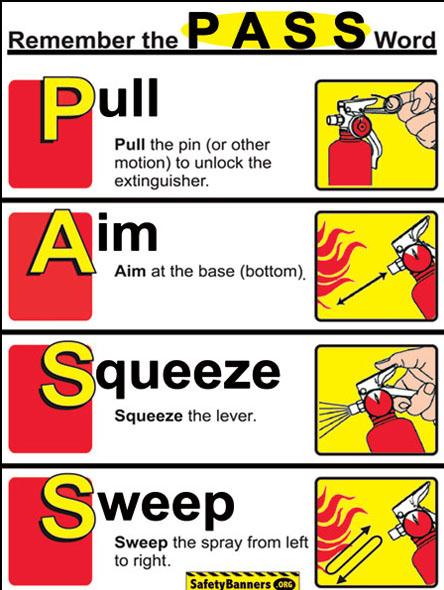
The P.A.S.S. Method
When using a fire extinguisher, remember P.A.S.S.:
- Pull the pin. This unlocks the handle and allows you to discharge the extinguisher.
- Aim the nozzle at the base of the fire — not the flames. Hitting the base cuts off the fuel supply.
- Squeeze the handle slowly and evenly to discharge the agent.
- Sweep side to side at the base of the fire until it appears to be out. Watch for re-ignition and repeat if necessary.
Tips
- Only fight small fires. If the fire is larger than a waste basket, or if it’s spreading, get out and call 911.
- Keep your back to an exit. Never let the fire get between you and your escape route.
- Check your extinguisher regularly. Make sure the pressure gauge is in the green zone. Replace or recharge after any use.
- Know your extinguisher type. Class A for ordinary combustibles, Class B for flammable liquids, Class C for electrical fires. An ABC-rated extinguisher covers all three.
- For vehicles, a small 2.5 lb ABC extinguisher mounted under the seat or in the trunk is ideal.
For Wildland Fires
A fire extinguisher can help with a small spot fire or ember ignition before it spreads. SSEPO training events include hands-on fire extinguisher practice — check the home page for upcoming sessions.